
If you travel solo, you’ve heard the questions. They come from a place of genuine concern from friends and family, and from curiosity from strangers at a gas station. “Aren’t you scared?” is a popular one. And the classic, “Don’t you get lonely?”
And here’s a surprising truth I’ve learned over the years: these concerns aren’t just for women. Every year at uCamp, more and more men join the solo traveler session. The reasons people travel alone are diverse—they’re single, widowed, divorced, or have a partner who simply can’t get away. But the fears are almost always the same: safety, loneliness, and feeling inadequate to solve problems alone.
For anyone feeling that hesitation, I can tell you the other surprising truth I’ve discovered: you are only as alone as you want to be.
That really clicked for me when one of my brothers was watching a Sunday morning news show. During a feature story on the elk rut in Yellowstone, the camera panned across a line of photographers, all with their huge lenses pointed at the wildlife. He saw the natural camaraderie between them, the shared passion, and he called me. He realized I wasn’t just wandering out in the wilderness by myself all the time. I could be with people whenever I wanted.
And he was right. Whether I’m at a nuCamp rally, a state park campground, or even boondocking in a remote spot, community is always there if you look for it.
You can join niche groups for hikers, paddlers, crafters, birders, or almost anything else you can think of, or you can just keep your own company. You get to decide just how much you engage. That’s the real freedom.
Your Greatest Tool: A Problem-Solving Mindset
I’ve been inspired by solo adventurers my whole life, especially my Aunt Marian, who volunteered in National Parks and took all sorts of trips on her own. She never treated it like a big deal, so I never saw it as a barrier. The only real hurdle was deciding to make it a priority.
Less than a month after buying my first TAB, I hit the road for Colorado and Utah. My very first stop was near Louisville, Kentucky, to help a friend photograph a wedding. On the morning of the wedding, I walked out to find that my Jeep’s battery was completely dead.
Now, that could have sent me into a panic. But I’ve learned that on any trip, challenges are going to pop up. When one does, my first thought is, “Well, there it is. I wonder what else might come my way?” That little mental trick allows me to skip the anxiety and put all my energy into solving the problem. (Thankfully, Louisville is a great place to get a new battery, and my friend’s husband had it handled before we even finished the wedding shoot.)
Getting Ready: Preparation is Peace of Mind
When you’re on your own, you’re the captain, the navigator, and the mechanic all in one. You don’t have a second person to double-check your work, so being prepared is essential.
- Embrace the Checklist. I have checklists for everything: packing, prepping the house before I leave, setting up camp, and breaking down camp. It might sound a little fussy, but a good checklist is what keeps you from forgetting something critical. If you want my campsite setup and departure checklists, you can find them, here.
- Stay on Top of Maintenance. Keep your TAB and your tow vehicle in tip-top shape. Having both professionally inspected and maintained isn’t just about preventing a breakdown; it’s one of the most important things you can do for your safety.
- Share Your Plans. My close friends and family always have a general idea of my itinerary. We use the Life360 app so they can see where I am, and I make sure they have the names of my campgrounds. It gives them peace of mind, and it means they’re paying a little more attention to the weather and news in the areas I’m visiting.
On the Road: Redefining “Safety”
When people talk about safety, they usually mean personal safety. But in my experience, there are a couple of other risks that are just as, if not more, important to manage.
- Weather: I travel with a weather radio, and finding the local NOAA station is one of the first things I do when I set up, especially if storms are in the forecast. I also make a note of the county I’m in to better track warnings. Apps like Watch Duty are invaluable for monitoring wildfires.
- Fatigue: When I first started, I’d push myself to drive twelve-hour days. I don’t do that anymore. Now, I keep my driving days between six and eight hours, adding extra buffer time for breaks. Many people adopt a 300 mile a day strategy.Arriving at your campsite alert and with daylight to spare is a simple but powerful safety strategy.
A Word for Women: Trust Your Gut. Always.
Even the most direct and assertive person can struggle with speaking up when something feels off. But learning to do so is one of the most critical skills you can develop.
A few years back in Colorado, I was walking through a busy mountain town with a friend when I got a prickly feeling on the back of my neck. I noticed a man seemed to be following us. I tested my theory by crossing the street and making a few random turns; he mirrored every move. In the middle of a crowded area, I pulled my friend aside and said, very loudly, “He’s following us.” The man immediately turned and disappeared into the crowd. It felt awkward, but it worked. That experience gave me the confidence to always trust my instincts.
Here are a few other tips:
- Low-Tech: Get a dog. A dog is a great alarm system, but it also makes you more memorable. Should anything happen, people are more likely to remember seeing you.
- High-Tech: Have a way to call for help, even without cell service. A satellite communicator like a Garmin inReach or a SPOT device can be a literal lifesaver.
- Be Smart with Strangers: I love meeting new people on the road—it’s one of the best parts of travel! But you must be discerning. People will often ask if you’re alone out of simple curiosity. You don’t owe anyone your story. I never reveal my exact locations on social media. When in doubt, say less. It’s better to feel a little less friendly than you’d prefer than to feel unsafe.
The Real Destination is Connection
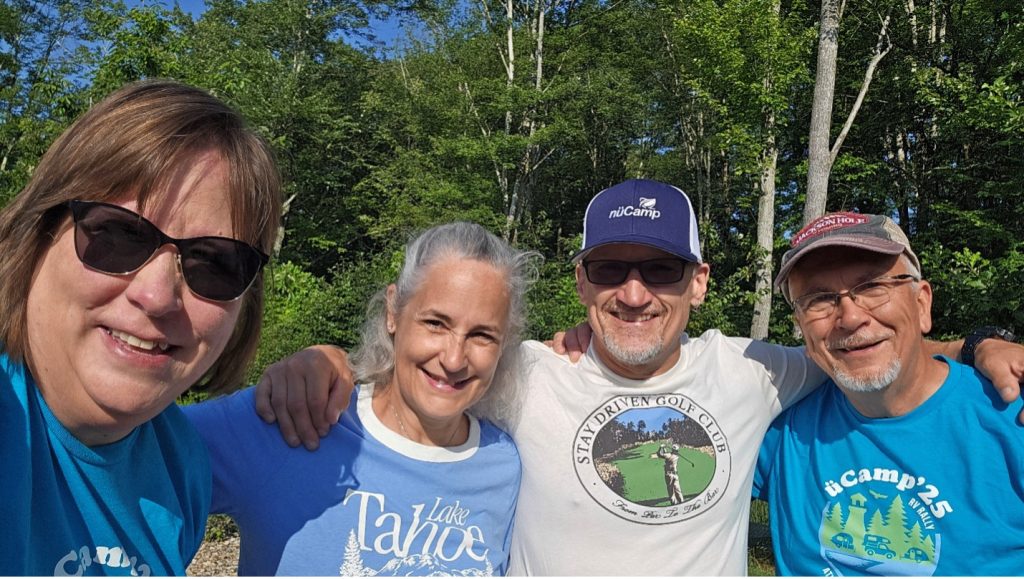
After all these years, I can tell you that the rewards of solo travel are well worth the risks. And the most unexpected gift? The rich, meaningful friendships I’ve formed along the way. I may have started this journey as a solo traveler, but it led me straight to a community.
So, if you’re sitting on the fence, let me urge you to take that first step. Your adventure is waiting for you.
4 responses to “Solo, Not Lonely: The Surprising Truth About Traveling By Yourself”
Recent Articles



Perfect advice, every word. I love traveling alone, making connections, and learning to be quiet with myself. When I travel alone I try to schedule meet up or events to break up the time. I’ve signed up for different workshops and that’s been fun
Thanks for the great advice.
You rock! I share your views, never feeling lonely, growing from the independence, reaching out to others as inspired to do so!
Enjoyed your article…good advice. Our son is vacationing solo to Europe this year, so I’m jotting down some of your info. Is that Steve B.? in the photo? We met him at Dunes SP in Indiana last Sept. and he told us about your travels.
Yes, it is Steve B.!